
Cleaning Grain: Post III – Selecting and Sizing for the Job
GG50 · Grain Cleaning Series · Post III of VI
Not Every Customer Wants the Same Corn
We ran dedicated corn cleaning plants that shipped to customers like Frito-Lay and Jack Daniel’s. Those lines were not set up to make one clean product. They were set up to make the exact product each customer asked for.
Not every buyer wanted the same corn coming off the line. Frito-Lay wanted sound, whole kernels that held up in their cook and looked right in the bag. Jack Daniel’s was tight on BCFM. Same crop, same elevator, two different jobs for the cleaning line.
Same line, two setups
For the snack corn, the job was the kernel itself. A cracked or light kernel was a defect even if there was not a speck of trash in the load. That put the gravity tables at the center of the line.
We ran the tables slower on that corn and took a bigger light cut. Feed came down so the bed had time to layer out. The dividers moved in to send more of the light end to the reject spout. The middlings went back around for another pass. More grain went out with the rejects, and we knew that going in. It was the price of meeting the spec.
For the distillery corn, the job was BCFM and test weight. Screens and air took out the broken corn, the fines, and the light trash. The destoner and the magnet took care of anything that could hurt the plant. Then the gravity tables went after the light kernels to hold test weight up. Frito-Lay wanted every kernel sound. Jack Daniel’s wanted the bushel heavy. Both jobs ran through the same tables, set two different ways.
Same machines. Different feed rates, different settings, different reject loads. The plants were built so the line could switch from one setup to the other. That flexibility did not happen by accident. It was decided when the equipment was selected, sized, and laid out.
That is what this post is about. In Post I we covered why we clean and the physics that make it possible. In Post II we went machine by machine: what each one removes, how the cut gets set, and where it runs out of road. Post II ended on a simple idea. A capacity number means nothing until you put a job description next to it.
Now we write that job description, pick the machines that fit it, size the whole system, and ask the question every manager eventually asks. Does the cleaning pay?
Write the Job Description First
“Clean it up some” is not a job description. Neither is “we need a 20,000 bushel cleaner.” Before anybody talks equipment, you need three answers on paper.
What is coming in? The crop, the moisture range, and the kernel itself. How much trash, and what kind? Cobs and fines? Pods and splits? Stones? How much does it change from one lot to the next, and from a dry year to a wet one? Design for the bad loads, not the average one.
What has to come out? Name it. Oversize trash, fines, light material, stones, off-size kernels, discolored kernels. Each one is a different separation, and Post II showed that each separation needs a machine that can see it.
What does the finished grain have to meet? A grade factor. A buyer’s spec. A processing requirement. A seed purity target. Put a number on it if you can, and say how it will be sampled and measured.
On the corn lines, that third question was the whole reason the plants existed. Each customer’s spec was the job description. Change the customer and you changed the job.
If you cannot describe the grain coming in and the product going out, you are not ready to compare capacity numbers. You are just comparing nameplates.
Pick the Separation, Then Build the Line
Once you know what has to come out, match each unwanted material to the physical difference that lets you remove it. Size, shape, density, air, color, or metal. That tells you which family of machine belongs in the line.
Then think about order. Each machine should hand the next one a stream it can work with. Scalping comes first because cobs and stalks get in the way of everything after. Size and air come next. Density, length, shape, and optical work come last, on grain that has already been cleaned and sized. A gravity table fed a trashy, unsized stream never gets its bed working.
A few rules that save money:
• Do not ask a scalper to remove anything that fits through the holes with the grain.
• Do not ask an aspirator to split two things that act the same in the air.
• Do not make a gravity table the first stop for dirty grain.
• Do not buy an optical sorter to cover for poor cleaning ahead of it.
• Do not add a machine just because there is room for it. Every machine should take out something the others cannot.
The corn plants added one more question: will the line need to make more than one product? If the answer is yes, flexibility has to be built in from the start. That can mean screens that change quickly, a way to route grain around a machine one customer does not need, and enough spouting and bin space to keep products apart. Bolting flexibility on later costs more and usually works worse.
A more precise machine will not fix a line that is asking it to make the wrong separation.
Size It for the Separation, Not Just the Bushels
Capacity is not how much grain fits through the machine. It is how much grain the machine can handle while still making the cut you bought it for.
Clean from storage, not at the pit
The first sizing question is not how many bushels. It is where in the flow the cleaner goes.
You do not have to clean at receiving rate, and most houses don’t. They take the grain in, put it in storage, and clean it when they pull it back out, either turning it, processing it, or loading out. That takes the cleaner off the harvest peak at the pit, and you clean when you know what the grain needs.
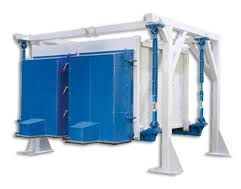
At our Ama, Louisiana export facility, the cleaning was on the outbound side. We had a 25,000 bushel an hour Texas Shaker and a 50,000 bushel an hour Megatex. The Megatex was really two 25,000 bushel units in one frame, and you could run just one side if you chose. We loaded ships at better than 60,000 bushels an hour.
Depending on the grain, we ran all the cleaners or only some of them. If the grain coming out of storage was already close, we cleaned part of the stream and blended it back with the rest to hit the final number the ship needed. If it was rough, everything ran.
That is a sizing lesson. The cleaners did not have to match the loading rate bushel for bushel on every ship. They had to clean enough of the stream to hit the blend, with room to clean all of it when the grain called for it. Three 25,000 bushel sections gave us choices. Splitting capacity into units you can turn on and off is its own kind of flexibility.
The catch with cleaning from storage is that the grain sits dirty until you clean it. The dryers, the aeration, and the bins carry that trash in the meantime, and Post I covered what that costs.
The same machine is rated differently for different jobs
In Post II I mentioned one maker that documents a shaker scalping corn at 60,000 bushels an hour, and lists another shaker at 10,000 an hour on dry corn when it has to hit a buyer’s foreign material number. The machines are not the same size, but the point holds. The tighter the cut, the lower the rate.
That is why seed plants run slow. A seed plant may have every machine from Post II in the line, and it feeds them gently, because one wrong kernel can cost the lot. Food plants run tighter than elevators for the same reason. Ask the supplier what rate the machine makes your spec at, not the top number in the brochure.
What actually sets the limit
On any cleaner, something runs out first. It is usually one of these:
• Screen or deck area. Grain needs time on the screen to find the opening. Overfeed it and good kernels ride over and trash rides through.
• Air. An aspirator or air screen cleaner can only move so much air through so much grain. Past that point, the light material stays put.
• Trash load. A machine rated on 2% trash will not do the same job on 6%. The trash takes up screen area just like grain does.
• The reject side. If the screenings spout, conveyor, or bin cannot keep up, the machine backs up no matter how good it is. More on that next.
Size for the bad loads and the busy days, with a margin you can explain. There is no universal percentage. The margin should come from your trash, your peak, and your spec.
Size Everything That Carries the Rejects
A cleaner makes at least two streams. Most plants size the grain stream carefully and treat the reject stream as an afterthought. That is backwards. Whatever you take out has to go somewhere, every hour the machine runs.
Walk the whole path on paper: incoming grain, each cleaning stage, clean grain, screenings, heavy rejects, and any stream that gets sent back around. Every one of those needs a spout, a conveyor, and a place to land.
Here is the same corn at the same rate with two different trash loads. The figures are illustrative. Plug in your own.
Item | Clean Year | Rough Year |
Grain rate | 20,000 bu/hr | 20,000 bu/hr |
Incoming weight (56 lb/bu) | 560 tons/hr | 560 tons/hr |
Screenings removed | 2% | 6% |
Screenings to move | 11 tons/hr | 34 tons/hr |
Screenings volume (at 25 lb/cu ft) | about 900 cu ft/hr | about 2,700 cu ft/hr |
Screenings over a 24-hour run | about 270 tons | about 800 tons |
Same cleaner, same bushels, three times the reject load. And screenings are much lighter than corn per cubic foot, so the conveyor and the bin fill faster than the tonnage suggests. Use your own density figure. It changes a lot with the crop and what is in the screenings.
If the reject system was sized for the clean year, the rough year is when it plugs. When it plugs, either the cleaner backs up or somebody opens it up and sends trash on with the grain.
So ask it plainly: where does everything we take out go, and can that route keep up on the worst day?
Feeder setup, air adjustment, and maintenance come in Post IV.
Does the Cleaning Pay?
In Post I, I said every elevator manager has worked out whether it pays to clean or to take the discount and blend. Here is that math. There are really three choices: clean it, blend it down, or ship it and take the discount.
What you gain:
• Discounts you avoid
• Markets you can sell into that you could not before, like the food corn customers in the opening story
• Grain that dries, stores, and processes better
• Equipment downstream that does not eat rocks
What you spend or give up:
• Shrink: every pound of screenings is a pound you no longer sell as grain
• Good grain that goes out with the screenings
• Handling, storing, and selling the screenings
• Power, dust collection, labor, and maintenance
• Owning and installing the equipment
An illustrative example
Every number here is made up to show the method. Use your own prices, your own discount schedule, and your own screenings value.
You have 100,000 bushels of corn at 4.5% BCFM. The contract is U.S. No. 2, which allows 3.0%. Assume corn is worth $4.00 a bushel, the buyer discounts 3 cents a bushel for each point over 3.0%, screenings sell for $80 a ton, and cleaning costs 1.5 cents a bushel to run.
Item | Take the Discount | Clean to 2.5% BCFM |
Discount (1.5 points × 3¢ × 100,000 bu) | $4,500 | $0 |
Weight removed (2.5% of 5.6 million lb, including 0.5% good kernels) | None | 70 tons (about 2,500 bu) |
Grain value lost at $4.00/bu | $0 | $10,000 |
Screenings sold at $80/ton | $0 | ($5,600) |
Cost to run the cleaner | $0 | $1,500 |
Net cost | $4,500 | $5,900 |
In this example, taking the discount wins. The break even is about 4 cents a point. Above that, cleaning pays. Below it, you are better off shipping it.
Notice the good kernels. Half a point of good grain in the screenings is 500 bushels, or $2,000 of that cleaning cost. That is why Post II kept asking you to sample the reject stream. Tighten up the cut and the math moves.
Two more things change the answer:
How the buyer discounts. This example uses a price discount. If your buyer deducts the excess BCFM as weight instead, you lose that weight whether you clean or not, and cleaning looks better.
Blending. If you have cleaner corn on hand, you may not need the cleaner at all. To bring 4.5% corn down to 3.0% with 2.0% corn, you need 1.5 bushels of the clean corn for every bushel of dirty corn. That works if you have the clean corn and the bin space to blend it, and it costs you nothing in shrink. Cleaning only part of the stream and blending it back, like we did at Ama, splits the difference.
And if the cleaner opens up a market that pays a premium, like the corn lines in the opening story, the math is a different conversation altogether. You are not comparing against a discount. You are comparing against a sale you could not make.
When the buyer does not discount
Some buyers will not take a discount at all. Make spec, or the load gets rejected. Food and distilling buyers often work that way. With those buyers, the third choice is gone. A rejected load means freight back, a truck, railcar, or barge tied up, a replacement load on short notice, and a customer wondering whether to call you next time. Against that, the cleaning cost in the example above is small change.
So the question changes. It is no longer whether cleaning pays. It is what it costs to make spec every time. The cleaner is part of what you are selling, and the premium those buyers pay is a market you could not reach without the line.
Cleaner grain is not automatically a better business result. Put a value on what you gain and on what you take out.
What to Ask Before You Buy
Take your job description to the supplier and ask them to answer against it, not against the brochure.
1. What performance will you commit to on our crop and our incoming condition?
2. At what feed rate, what finished quality, and how much good grain in the rejects?
3. Can we run a test on our own grain, including a bad lot?
4. How will the guarantee be sampled and measured? Who pulls the samples, and where?
5. What air, power, headroom, access for screen changes, and reject handling does the installation need?
6. If we need more than one product, how fast can the line change over?
7. Can we visit a plant doing the same work on the same crop?
8. How will we verify the result after startup?
Questions 4 and 8 tie back to the sampling series and to the validation versus verification discussion in the tramp metal series. A guarantee you cannot measure is just a sales pitch.
Buy the Result
Start with the grain. Name what has to come out. Set the finished product target. Decide where the cleaner sits. Then pick and size a system that can make that separation at the rate the plant needs, with a reject system that can keep up on the worst day.
The nameplate is part of that conversation. It is not the answer.
The corn plants worked because somebody started with what each customer wanted and built the lines to deliver it. The machines came second.
Once the right equipment is in, the job is not done. Steady feed, setup, calibration, operator training, SOP’s, and maintenance decide how well it actually performs. That is Post IV.
Have you ever put in a cleaner that could handle the bushels but could not make the cut? What did you have to change? Tell me in the comments.
Thank you for reading.
Regards,
Grain Guy Fifty

Comments